
ZOOM H2n Handy Audio Recorder with Brilliant Stereo Recording
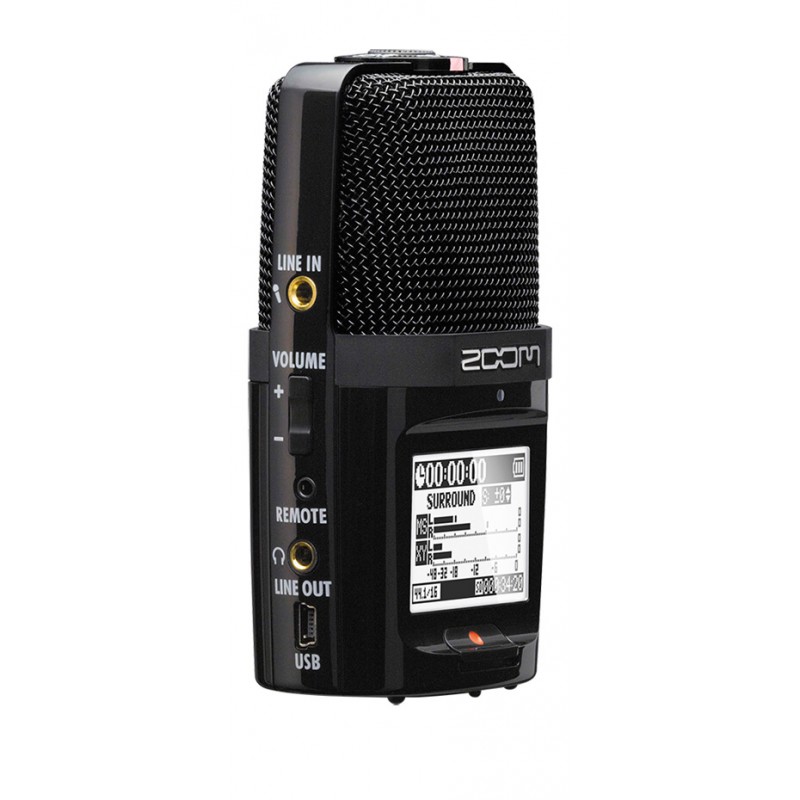
Using the ZOOM H2n
With its multiple microphones and recording modes, the H2n can handle just about every kind of application. Here are just a few ways it can be used:
1. Live recording of concerts and rehearsals, in either stereo or surround sound
2. Location videography—the H2n gives you plenty of options in postproduction
3. Creating audio for YouTube videos
4. Generating lasting audio documents of important events
5. As a USB microphone providing input to recording software.
6. You can even use the H2n as a multi-purpose USB microphone!
Here's what comes included with the H2n:
1. Operation manual
2. SD card (2GB)
3. 2 AA batteries
4. Steinberg Cubase LE software download
5. Steinberg WaveLab LE sofware download
The H2n Handy Recorder is the only portable recording device to come with five built-in microphones
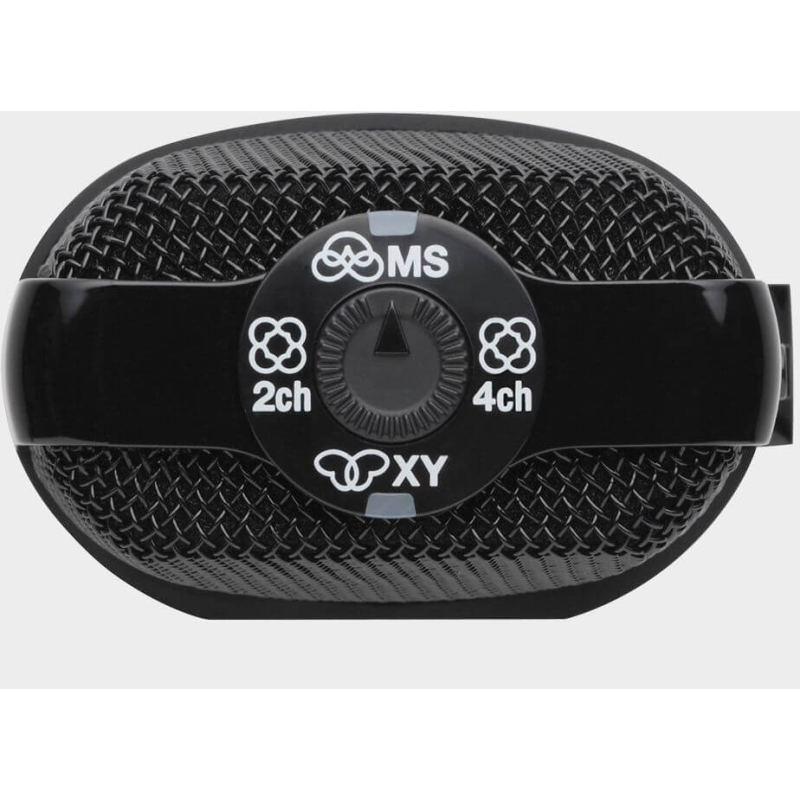
and four different recording modes: X/Y, Mid-Side, 2-channel surround and 4-channel surround.
Other advanced features include automatic gain control and onboard MS decoding, plus effects like compression,
limiting and low cut filtering.
Mid-Side recording is an incredible technique that allows you to actually adjust the width of the stereo image after it has been recorded,
while maintaining perfect mono compatibility, making it especially useful for film, video and television projects.
X/Y for Natural-sounding Stereo
The X/Y technique provides a great way to cover a wide area while still capturing sound sources
in the center with clarity and definition, making it perfect for all types of live stereo recording.
The H2n's built-in X/Y microphone provides two matched unidirectional microphones set at a 90 degree angle relative to one another,
optimum for most stereo recording applications.
Surround Sound for Lifelike Realism
The H2n allows you to combine the signals from both the X/Y and MS microphones in order to create surround sound recordings
of everything you hear from all directions.
Use 2ch mode to create a single stereo file of the combined mics,or 4ch mode to record the signal from the H2n's X/Y mics onto one stereo track and signal from the MS mics onto another.
In addition, the H2n's MS decoding feature can be used to independently alter the level of the Side signal in both 2ch and 4ch modes.
Headphones can be connected to the H2n for private monitoring of the input or recorded signal.
There's also a built-in speaker on the back panel for fast monophonic monitoring of the recorded signal without the need to make any connections.
The H2n USB port provides a digital output of the stereo mix and allows data to be sent to and from your computer.
From there, it can be imported into editing software such as the supplied WaveLab LE. USB also enables the H2n to be used
as a 2-in/2-out audio interface or as a USB microphone.
Auto-Record
Auto-Record allows the H2n to automatically start recording when a certain level of sound is detected.
As soon as an incoming signal exceeds the Start Level you've set, recording begins.
There's an equivalent Auto-record Stop function, too; as soon as incoming signal drops below the Stop Level you've set, recording ends.
Data Recovery
The H2n's Data Recovery feature automatically repairs corrupted files—something that can happen if power is interrupted during recording
or if an SD card is removed during a writing or editing procedure.
Pre-Record
The interview started a split-second before you were ready. The conductor lifted his baton just as you were checking a cable.
The talent went back on-air a moment too soon. No problem… as long as you're using a H2n.
Its Pre-record function automatically keeps the H2n silently but continuously
recording in the background, all the time, keeping the previous two seconds* when you hit RECORD.
*One second when recording in 4ch surround mode at a 96 kHz sampling rate.
The H2n provides an arsenal of effects that allow you to add polish to your recordings
and compensate for any problems or limitations in the acoustics of the recording environment.
1. Compression and limiting can be used to control fluctuations in level, acting like an automatic volume control.
The main difference between the two is that a limiter reduces louder sounds more severely.
2. A low-cut filter removes signal below a designated frequency. This is useful for eliminating pops, wind noise, blowing,
and other kinds of low frequency rumble such as transmitted resonance from an onstage mic stand.
3. There's also an onboard metronome and chromatic / guitar / bass tuner.
In addition, playback can be looped and the playback speed varied without pitch change (or vice versa) to facilitate phrase training.
4. The H2n can record audio in two different basic file types: WAV and MP3.
The H2n requires just 2 AA batteries—either alkaline or rechargeable NiMH.
Battery life when using alkaline batteries is more than 20 hours, even during continuous recording.
Alternatively, you can use an optional AD-17 AC adapter, which allows you to power the H2n from any standard wall socket.
The H2n records directly to SD cards. It supports standard SD and SDHC cards, up to 32 gigabytes.
The H2n's USB port allows it to send and receive digital data and to act as a 2-input / 2-output audio interface
(enabling you to use it as a USB microphone). Simply connect the H2n to your laptop or desktop computer via USB,
launch your favorite DAW or use the included WaveLab LE software, and start laying down your tracks.
| GENERAL | |
| Recording media: | 16MB–2GB SD cards, 4GB–32GB SDHC cards |
| Built-in memory: | Up to 1 minute in 96kbps MP3 format |
| (Recording overwrites any previous recording in memory) | |
| Mic arrangements: | 90˚ X/Y stereo, MS stereo with adjustable side mic level |
| Recording modes: | MS, XY, MS+XY (2ch), MS+XY (4ch) |
| Microphone types: | Directional (XY, MS mid mics) |
| Bidirectional (MS side mic) | |
| Maximum sound pressure input: | 120 dB spl (directional) |
| 122 dB spl (bi-directional) | |
| FILE FORMATS | |
| Stereo uncompressed PCM: | 44.1 / 48 / 96kHz, 16 / 24bit WAV (BWF) |
| Compressed MP3 (recording): | 44.1kHz, 48kHz |
| 56 /64/80/96/112/128/160/192/ 224/256/320kbps | |
| (Not compatible with MS-RAW recording) | |
| Compressed MP3 (playback): | 44.1kHz, 48kHz |
| 32/40/48/56/64/80/96/112/128/160/192/224/256/320kbps | |
| DIGITAL PROCESSING | |
| A/D conversion: | 24-bit 128× oversampling |
| D/A conversion: | 24-bit 128× oversampling |
| Signal processing: | 32-bit |
| Recording time (2GB card): | 3:08:00 (44.1kHz/16bit WAV), 34:43:00 (128kbps MP3) |
| ADDITIONAL FEATURES | |
| Lo cut: | 80Hz high-pass filter |
| Comp/Limiter: | 3 types of compressors and 3 types of limiters |
| Auto gain: | Automatic input gain adjustment (3 levels) |
| Pre rec: | 2 seconds of pre-recording |
| Auto rec: | Automatic recording start/stop, continuous standby |
| Tuner: | Chromatic, guitar, bass and alternate (A/E/G/D/DADGAD) tunings with automatic string detection |
| Metronome: | 40–250 BPM range, five tones, pre-count |
| Speed: | Playback speed adjustable between 50–150% |
| Key control: | Playback pitch adjustable ±6 semitones |
| AB repeat: | Repeats playback between selected points in a file |
| File divide: | Divides a file into two |
| File normalize: | Maximizes file volume |
| (Cannot be used with MP3s) | |
| File MP3 encode: | Converts WAV files to MP3 formats at fixed bit rates |
| Mark: | Up to 99 marks |
| (WAV files only) | |
| Surround mixer: | Adjusts mix balance when playing back 4ch surround recordings |
| OTHER | |
| Display graphic: | 128×64 pixels backlit LCD |
| Input gain: | 0 to +39 dB |
| Input jack: | Line/mic stereo mini jack with plug-in power |
| 2 kΩ impedance at input levels of 0 to –39 dBm | |
| Output jack: | Line/headphone stereo mini jack |
| Rated output level: | −10 dBm (output impedance 10 kΩ or more) |
| Headphones: | 20 mW + 20 mW (into 32 Ω load) |
| Built-in speaker: | 400mW, 8Ω, mono |
| USB: | Mini-B type |
| Card reader operation | |
| USB 2.0 high speed: | Audio interface operation |
| USB 1.0 full speed: | Supports 44.1 / 48kHz sampling rates and 16-bit rate |
| USB bus power operation supported | |
| Power: | Two AA batteries, AD-17 USB to AC adapter (DC 5V 1A) |
| Continuous operation of 20 or more hours when recording 44.1kHz/16-bit WAV files using alkaline batteries | |
| Physical features: | Tripod mounting socket, strap attachment |
| Dimensions: | 67.6mm (W) × 113.85mm (H) × 42.7mm (D) |
| Weight: | 130 g (without batteries) |
- EAN: 4515260010080
- Brand: Zoom
- Product Code: ZOOM-H2N
- Availability: Low Stock
- €165.00
- Ex Tax: €134.15



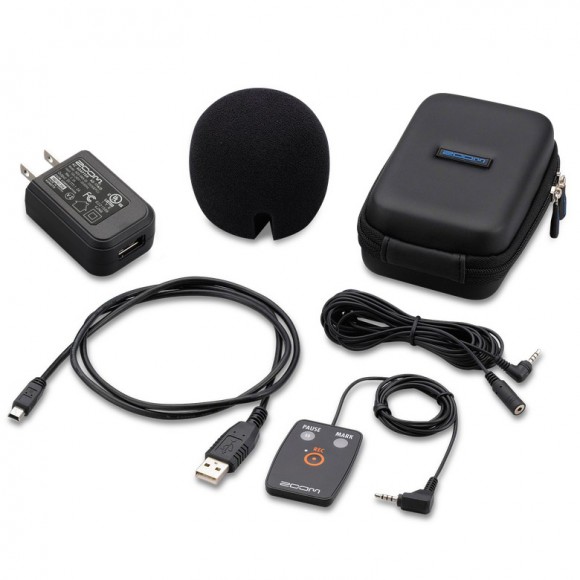

Zoom H2n Accessory Pack
The Zoom Accessory Pack for H2n provides you with all the accessories you need when you are recordin..
€37.99 Ex Tax: €30.89
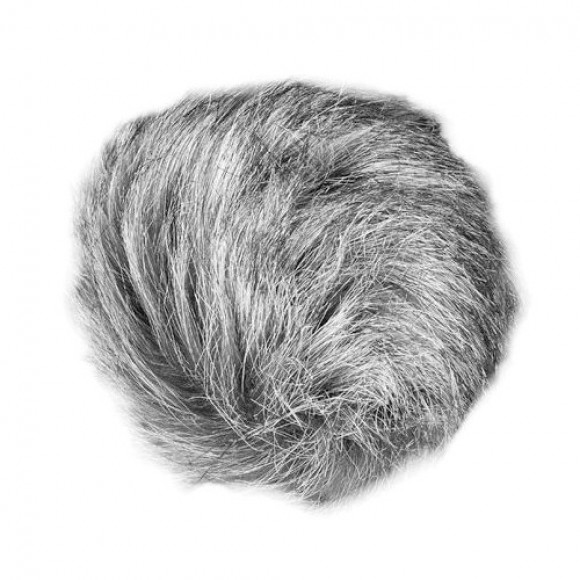

Zoom WSU-1 Universal Hairy Windshield
The Zoom WSU-1 Hairy Windscreen is designed to reduce wind noise while remaining acoustically transp..
€18.50 Ex Tax: €15.04
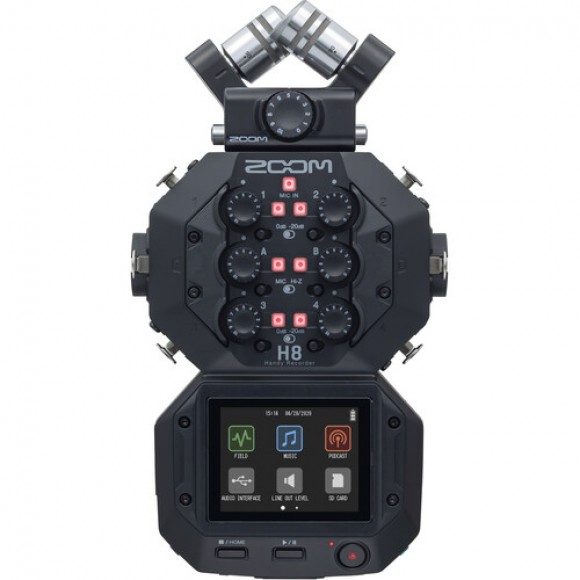
Zoom H8 Audio - 8-Input / 12-Track Portable Handy Recorder
H8 FEATURESCustomized applications for field recording, music and podcasting3 distinct interfaces fo..
€445.00 Ex Tax: €361.79
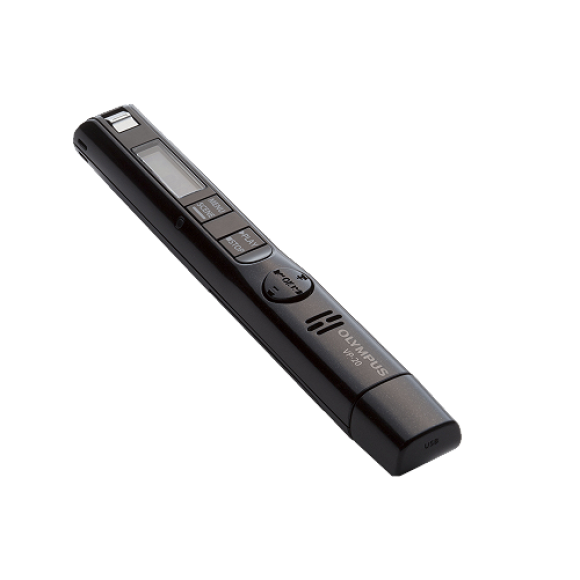
OM System VP-20 Digital Slim Voice Recorder
The slim‑sized VP‑20 marks a revolution in digital voice recording. Like a pencil, just slip it into..
€109.00 Ex Tax: €88.62